




Denying War Crimes in the Public Space of BiH and Kosovo
Denying War Crimes in the Public Space of BiH and Kosovo
The denial of war crimes, the glorification of perpetrators, and the manipulation of facts have become part of the digital and media space - how to fight against it?
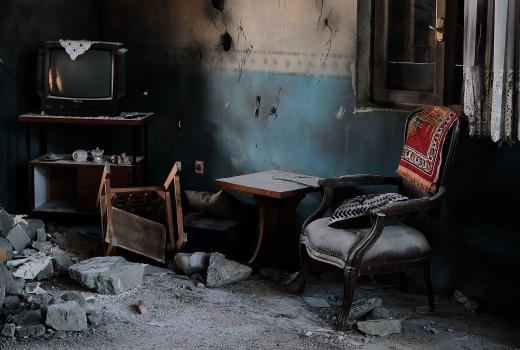
photo: Pexels / Illustration
Although international and domestic courts have established facts about war crimes, genocide, and other forms of violence, narratives that deny, relativize, or distort those facts continue to spread on social media. Social media platforms enable the rapid dissemination of content that glorifies convicted war criminals, reduces the number of victims, or mocks survivors. Very often, such content becomes part of media discourse as well.
Political actors, especially those who use populism in their political activities, do not miss the opportunity to exploit this, so the denial of crimes is used to stir emotions among parts of the electorate.
A particular problem arises when media outlets present social media content as legitimate public debate or “alternative opinion,” allowing crime denial and revisionist views to enter the broader public space. Thus, along with all the consequences of the wars in Balkan countries such as Bosnia and Herzegovina and Kosovo, crimes are minimized or denied, the recent past becomes subject to manipulation, and survivors and families of victims relive trauma, developing feelings of insecurity and fear.
In the fight against distorted representations of the past and the digital and media spread of such content, the role of professional journalism is extremely important, as is the responsible use of social media, which can help verify facts, provide historical context, and suppress disinformation. Bosnia and Herzegovina and Kosovo, to which the following analysis refers, are spaces where this struggle, although three decades have passed since the war, continues.
BOSNIA AND HERZEGOVINA: The struggle for the interpretation of the past continues
In Bosnia and Herzegovina, three decades after the end of the war, the struggle over the interpretation of the past remains one of the key political and social conflicts. Although the verdicts of international and domestic courts have clearly established facts about war crimes, genocide, and systematic violence, the digital space has become the main arena where these facts are challenged, relativized, or completely denied. Social media, and later the media, have enabled revisionist narratives to spread faster, more aggressively, and more massively than ever before.
In a digital ecosystem that rewards conflict, emotion, and virality, crime denial has become not only visible but normalized. Algorithms do not distinguish truth from manipulation; they only measure engagement. And content that denies genocide, glorifies convicted war criminals, or mocks victims often triggers exactly what algorithms value most: reaction.
Amela Delić-Aščić, professor at the Department of Journalism at the Faculty of Philosophy, University of Tuzla, tells Mediacentar that essentially, from a socio-humanistic perspective, the denial of war crimes cannot benefit anyone who is conscious and conscientious; in the long term, such practices harm the deniers and the entire society. She also states that denial is of great help to politicians who deny crimes.
“These are populists whose public appearances and political programs are fundamentally empty, lacking logical argumentation or the ability to conduct dialogue. Although listening to such speeches or reading such posts is distressing for citizens who are media- and information-literate and who think critically, unfortunately, there are always many others who, for various reasons – most often ignorance, lack of education, indoctrination, or simply open hatred toward others/different people – follow such political figures,” says Delić-Aščić.
She adds that these politicians count precisely on such voters and, by fueling their emotional charge around sensitive topics from the past, successfully prolong their political life.
“On the other hand, such figures are also suitable for certain so-called media outlets, that is, anonymous portals or openly politically biased media, which seek to attract the attention of the same audience that deniers/revisionists count on. The relationship between such media and populists is symbiotic; they support each other, give each other legitimacy, and together inflict immeasurable consequences on the development of a democratic society,” Delić-Aščić emphasizes.
Social media as the main incubator of revisionism
On Facebook, TikTok, YouTube, and X, posts denying the Srebrenica genocide, reducing the number of victims, mocking survivors, or glorifying perpetrators appear daily. One of the most widespread examples is the mass distribution of videos of Ratko Mladić accompanied by music and comments such as “hero,” “legend,” or “defended the people.” Such content often receives tens of thousands of views and hundreds of supportive comments.
After the ICTY delivered its final verdict against Mladić, a trend emerged on social media in Bosnia and Herzegovina and Serbia of posting his photos with messages such as “a verdict against the people,” “we know the truth,” and “we will never acknowledge genocide.” These posts did not remain isolated; portals picked them up, politicians shared them, and in some cases, television channels even broadcast them.
A similar phenomenon occurred after Radovan Karadžić’s verdict. TikTok saw an increase in videos portraying Karadžić as a “statesman,” “poet,” or “victim of international injustice.” Research shows that young TikTok users, who lack developed mechanisms for critically reading historical content, often hear about these individuals for the first time through such manipulative videos.
When discussing the media as allies or correctives in this process, Delić-Aščić notes that when we say “media,” we must be careful not to place all media in the same category.
“Many media outlets report responsibly, professionally, and with a vision (of a future in which we must all live together), explaining and interpreting reality. On the other hand, there are even more anonymous portals and individuals of questionable credibility on social media who act daily in favor of populists.”
She believes that, unfortunately, some media with clear ownership structures, and even public broadcasters, openly support political deniers of crimes, including genocide deniers.
“Sometimes, following outdated media logic focused on anomalies, even otherwise credible media unknowingly become allies of such figures when they give them media space. Instead, they could give space to ordinary citizens affected by such politics, offer constructive examples of cooperation in communities, or host politicians capable of conducting dialogue.”
From digital noise to legitimate discourse
What begins as a post from an anonymous profile often ends up in mainstream media. The mechanism is simple: social media produces content, and media legitimize it.
An example is a 2023 case when a Facebook video denying the Srebrenica genocide and claiming that “the numbers are fabricated” was posted. Within 24 hours, several portals from Republika Srpska picked it up, presenting it as “an alternative expert opinion.” Soon after, television channels broadcast it, citing “a debate taking place on social media.”
A similar pattern is visible in reporting on commemorations in Prijedor, Ahmići, Grabovica, or Kazani. While social media spread comments that relativize crimes, some media outlets present those comments as “the views of part of the public,” giving them weight and legitimacy.
The denial of war crimes in Bosnia and Herzegovina is not merely a spontaneous phenomenon; it is often politically driven. Statements by political leaders have enormous influence on the digital space, as their messages are widely shared, commented on, and reinterpreted.
One of the most cited examples is Milorad Dodik’s repeated statement that “the Srebrenica genocide is an invented story,” including statements made in the National Assembly of Republika Srpska. Such statements fuel digital denial campaigns, as users invoke the “authority” of a political leader.
On the other hand, in the Federation of BiH, narratives occasionally appear that minimize or deny crimes committed against Serbs or Croats, particularly in the context of Kazani, Grabovica, or Uzdol. Although these narratives are less institutionally supported, they spread through social media and certain portals, creating parallel versions of the past.
Psychological consequences - denial as an extension of trauma
For survivors and families of victims, the denial of crimes represents a form of secondary victimization. Psychologist Nermina Vehabović-Rudež emphasizes that denial acts as “renewed violence against victims,” as it deprives them of recognition of their suffering and complicates the process of dealing with trauma.
Survivors of Srebrenica often state that dealing with denial is harder than dealing with their own memories. Families of the missing express similar sentiments. For them, denial is not just a political problem; it is an attack on the very possibility of discovering the truth about the fate of their loved ones.
In Bosnia and Herzegovina, more than 7,000 people are still missing. Although specialized portals and institutions address this issue, stories of the missing rarely reach the broader public. When they do appear in the digital space, they are often subject to manipulation. At the same time, murals and graffiti glorifying individuals convicted of war crimes appear in public spaces, while memorials dedicated to victims are often vandalized.
One of the most dangerous aspects of digital revisionism is its impact on the sense of security, especially among returnee populations. When returnees in Srebrenica, Prijedor, Foča, or Stolac see daily messages on social media denying their suffering or glorifying perpetrators, it creates an atmosphere of fear and insecurity.
In several cases, digital threats have spilled into physical space. In Srebrenica, returnees reported receiving threats on the street after online denial campaigns. In Prijedor, graffiti with hateful messages appeared following viral posts.
Such content creates a sense of insecurity, mainly among returnee populations, through distribution via social media and the media.
“I assume that media discourse dominated by crime denial, revisionism, and hate speech affects citizens. Numerous studies have shown that reporting focused on negativity evokes negative emotions in audiences, and I can assume that in this case, fear is the most pronounced,” concludes Delić-Aščić.
The fight against crime denial today is a fight for public space, for the dignity of victims, and for the future of mutual trust. At a time when algorithms decide what we see, and media often take content without verification, truth becomes not only a moral but also a social obligation.
KOSOVO: Breeding ground for the denial of war crimes
Although 27 years have passed since the end of the war in Kosovo, around 1,600 people are still missing. The whereabouts of their remains are unknown, interstate cooperation between Kosovo and Serbia is lacking, and even more so the opening of the Serbian military archives, a case that has been proposed for discussion within the European Union-facilitated dialogue. The pain and trauma of the war remain fresh partly because of this unresolved issue. Precisely the failure to establish the fate of the victims has left room for war crimes to be questioned or denied, even decades later.
Nevertheless, some of the largest massacres committed against the Albanian civilian population in Kosovo in 1999 continue to be denied or presented as staged events allegedly orchestrated to justify NATO's intervention in March 1999.
The same narrative continues to be disseminated through Serbian traditional media, online media, and social networks.
For Adelina Hasani, Research Director at the Kosovar Institute for Policy Research and Development (KIPRED), the denial of war crimes committed in Kosovo, Bosnia and Herzegovina and Croatia remains one of the central elements of Serbia's official narrative about the wars of the 1990s. She argues that responsibility for generating and reproducing these narratives lies primarily with Serbia's institutional and political discourse, which has repeatedly denied or relativized the responsibility of the Serbian state and Serbian forces for war crimes committed during the conflicts.
“As a result, young people have been exposed to a selective interpretation of history in which the Serbian people are presented primarily as the main victims of the wars of the 1990s, while crimes committed against Albanians, Bosniaks and Croats are denied, relativized or minimized,” Hasani said.
On the other hand, according to Gentiana Paçarizi, Managing Editor at Kosovo 2.0 and author of manuals and research on disinformation, traditional media and social media have become the main sources through which citizens shape their understanding of history. For most people, history is no longer learned only through school or academic literature, but also through news, documentaries, television programmes and online content. In the absence of a strong historical foundation, the public becomes more vulnerable to historical distortion and revisionism.
Before the dominance of social media, these narratives were spread primarily through the Serbian press. Serbian newspapers have long been readily available in Kosovo. Just a few minutes from Prishtina, in Gračanica, Serbian newspapers could be purchased every day. These newspapers were dominated by narratives portraying Kosovo as a territory "occupied" by Albanians while minimizing or denying the crimes committed during the war. Albanian-language newspapers were not available in these shops. In the absence of alternative sources of information, readers were exposed almost exclusively to a single version of events.
The same applies to television. Areas inhabited by a Serbian majority in Kosovo are covered by cable networks owned by Serbian operators, whose channel selection excludes, for example, Serbian channels such as N1, last year's closure of Al Jazeera Balkans, as well as RTK2, the Serbian-language public television channel of the Radio Television of Kosovo. As a result, citizens are presented with only one narrative regarding the past, the war, war crimes, and even the lives of Serbs in Kosovo today.
“This approach has not been limited to political statements, but has also been reflected in school textbooks, commemorative practices and the way the past is interpreted and presented in public space,” Hasani added.
The same pattern is evident on social media, which is also managed by Serbian media operating in Kosovo. One of them is Kosovo Online. The editorial line of this media outlet is aligned with the narratives promoted by the authorities in Belgrade.
From cartoons to the walls of North Mitrovica
In addition to news and daily reporting, narratives about the war in Kosovo are also constructed through satirical content. One of the most frequently used formats is political cartoons, which appear to aim at political humor but often convey messages that relativize or overturn historical facts.
One such example can be found in the cartoon section of the Kosovo Online portal, where the main events of the Kosovo war are portrayed from a perspective that shifts responsibility away from the perpetrators of crimes and onto the victims or the international community.
Several caricatures can serve as an example – in one, William Walker, the former head of the OSCE Mission in Kosovo, is depicted feeding the Albanian double-headed eagle with a drop of blood, implying that the events in Račak were used to strengthen the Albanian cause and justify NATO's intervention; in another cartoon, the monument to Kosovo Liberation Army commander Adem Jashari is built on top of a pile of human skulls, creating the impression that he and the KLA were responsible for the killing of Serbs, even though historical facts show that the Jashari family was attacked three times by Serbian forces and that 59 members of the family were killed in March 1998; another cartoon depicts a Serb looking at the date of 24 March 1999, the day NATO began bombing Yugoslav military targets, and seeing only a grave marked with a cross, while an Albanian sees only the NATO logo, separating the military intervention from the context of ethnic cleansing, killings, and the mass expulsion of Albanians that preceded the bombing.
Taken together, these cartoons serve as more than political satire. They construct an alternative version of history in which war crimes are relativized, victims are portrayed as aggressors, and international intervention is presented as the cause rather than the consequence of the violence committed during the war. Through humor and irony, such messages become easier to internalize and contribute to the normalization of revisionist narratives.
“When a media outlet, a public figure or a social media page presents a distorted interpretation of history, it can spread rapidly and be accepted as truth, especially if it reinforces existing beliefs or appeals to strong emotions,” Paçarizi said. She adds that social media algorithms reinforce this process by privileging content that generates engagement, while simplified and polarizing narratives often reach wider audiences than nuanced, fact-based explanations.
The narratives constructed in the media do not remain confined to television screens or mobile phones. In northern Kosovo, they have also entered public space through graffiti and murals glorifying individuals convicted of war crimes.
For years, the walls of municipalities in northern Kosovo displayed graffiti featuring Ratko Mladić, the former commander of the Army of Republika Srpska, who was convicted of genocide, crimes against humanity, and war crimes.
Hasani said that the glorification of individuals convicted of war crimes has become one of the key mechanisms through which denial is normalized. She points to the Ratko Mladić murals in Belgrade also as a symbolic example of contested memory politics.
“These practices not only challenge efforts toward transitional justice but also create an environment in which the denial and relativization of war crimes become part of political and social identity,” she said.
Alongside his portraits, slogans such as “When the Army Returns in Kosovo” (“Kad se vojska na Kosovo vrati”) have appeared, carrying nationalist messages that, for many Albanian citizens, represent a painful reminder of the war and a continuing sense of insecurity. It was only in 2025 that Kosovo's institutions launched an operation to remove these graffiti and symbols from public spaces in the north, describing them as messages that incite hatred and glorify individuals convicted of war crimes.
Narratives repeated every anniversary
The same narratives are not spread only through cartoons. They are also repeatedly reproduced in media articles, particularly on the anniversaries of key events from the Kosovo war.
According to Hasani, these narratives have increasingly migrated into digital spaces.
“Social media platforms are not necessarily the source of these narratives, but they serve as infrastructure for their circulation, dissemination and normalization within different online communities,” Hasani added.
In January this year, on the anniversary of the Račak massacre, Kosovo Online published an interview with former Serbian investigating judge Danica Marinković, who claimed that those killed in Račak were not civilians but “Albanian terrorists” and that William Walker fabricated the event to justify NATO's bombing campaign. The article offers no confrontation of these claims with international reports, evidence collected over the years, or the findings of institutions that have examined the case. Instead, it presents them as the dominant interpretation of the event.
A similar approach can also be observed in the reporting on the “Panda” case in Peja, where six Serbian youths were killed at a local bar in December 1998. Although Serbian President Aleksandar Vučić has publicly stated that there is no evidence that Albanians committed the crime and that it may have been organized by the Serbian secret services, this is not mentioned in the article. Instead, the case is once again presented as a crime with unknown perpetrators, leaving open the narrative that for years attributed responsibility to Albanians. However, it is important to know what the facts are determined by the court, that is, what are the official results of the investigation. It has never been officially determined who is behind this mass murder.
These examples illustrate how repeated denial narratives extend far beyond individual media reports. According to Hasani, social media should not necessarily be seen as the origin of these narratives, but rather as the infrastructure that enables them to spread and become normalized. She argues that the consequences are particularly significant for younger generations, who increasingly construct their understanding of the past through digital sources rather than formal education.
“Disinformation in this case does not consist only in distorting facts, but in creating a collective identity based on victimhood, a sense of injustice and the need to defend an exclusive version of the past,” she explains.
Rather than simply influencing perceptions of individual historical events, repeated denial narratives shape broader understandings of identity, responsibility and victimhood. Through continuous repetition across traditional media, social media, cartoons and public space, they become embedded in collective memory and contribute to the normalization of historical distortion.
“Through the combination of state narratives, collective memory practices and digital amplification, a continuity of identity is constructed that protects the nation's self-understanding as a victim while avoiding responsibility for the past,” Hasani added.
In this way, through constant repetition, these narratives do not remain merely part of media reporting but contribute to shaping collective memory and normalizing the historical distortion of events.
However, according to Paçarizi, the media are not destined to be only part of the problem. “Professional journalism can provide historical context, verify public claims, confront narratives with credible sources and create space for expert voices. Its role is not only to report what has been said, but also to help the public understand whether those claims are supported by facts and how they fit into the broader historical context,” she said.
She argues that social media can also become part of the solution by helping to educate the public and counter disinformation when used responsibly by professional media, historians and credible institutions. Ultimately, their impact depends less on the platforms themselves than on the professional standards of those producing the content and on citizens' ability to critically assess the information they consume.
The article was created within the project “Presented / Digital Majority – Cross-Border Reporting”, which is implemented by the Foundation for the Development of Media and Civil Society “Mediacentar” in cooperation with the organization Pro Peace in Bosnia and Herzegovina.
